DOWNLOAD COLSTON’S LAST JOURNEY HERE
Colston’s Last Journey is an interactive audio project. A sea of interactive audio is layered over the centre of Bristol/UK. It extends all the way along the historic Broadquay from the Colston plinth (where the statue of Edward Colston used to stand) to the other end of Pero’s Bridge (the historic Broad Quay), which is where the Colston statue was flung into the waters of the Bristol Floating Harbour by protestors on 7 June 2020.

To access this audio experience you can downlead the app to your smartphone, go to the start of the soundscape at the Cenotaph in Bristol city centre (just up from the Colston plinth, below) and follow the on-screen instructions. The soundscape is located from the Cenotaph all the way to Pero’s Bridge (and over the bridge) – that’s the horned bridge over the water you will see in the distance as you wander down towards the Floating Harbour.
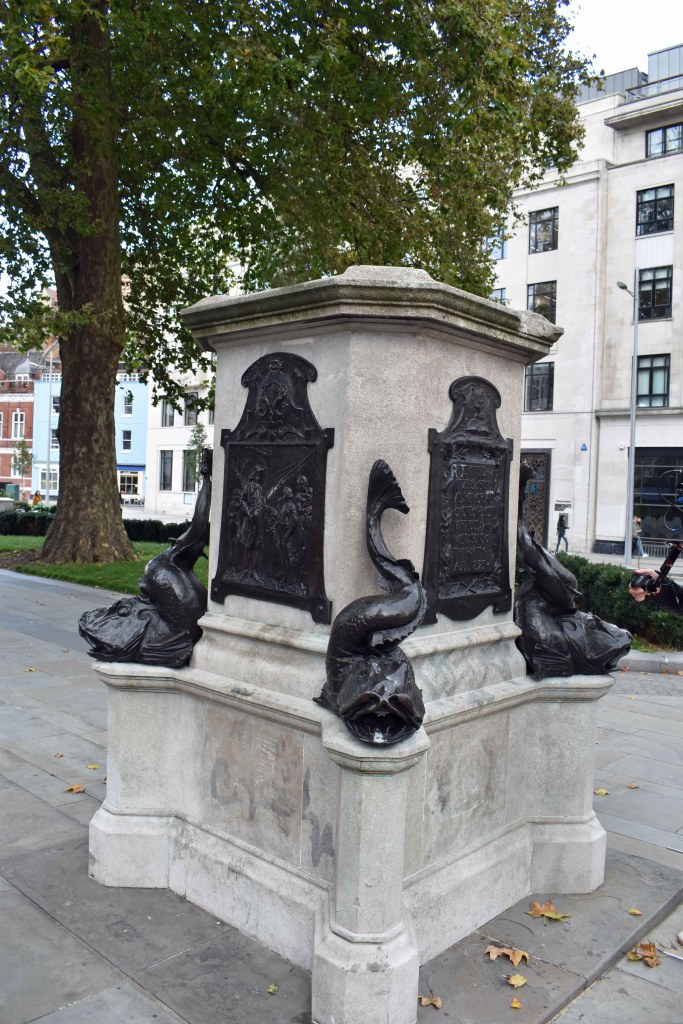
The Colston plinth in Bristol city centre
You are immediately afloat on the interactive audio-ocean, the Sea of Woe: fragments of facts, statements, re-created dialogues, names of captains, slave trade statistics, commentaries from the time etc etc – all taken from or with relevance to Bristol’s involvement in the Transatlantic Slave Trade – arise out of the liquid depths of the Sea of Woe and spiral in to you.
But it’s even more than that: floating upon the audio-sea and moored along the historic Broad Quay are 9 ‘ghost slave ships’. These are the ghosts of real ships which actually sailed from Bristol to the coast of West Africa and then on to the West Indies in the 17th and 18th centuries. Each of these audio-slave ships represents a different aspect of the trafficking of enslaved Africans. When you come across one , you can board it* and listen in to that particular aspect of the slave trade that ship represents. Then you re-embark on the audio-ocean and continue on your voyage of discovery.
(*metaphorically – what actually happens is that you walk into ‘a soundpool’: you hear a ‘swoosh’ sound and the audio content particular to that ship fades up. When you ‘disembark’, you hear the ‘swoosh’ again, the sounds of that ship fade away and you are back on the Sea of Woe.)
EXTRACT FROM EXPERIENCE HERE (VIDEO RECORDING)
‘SEA OF WOE’ HERE (AUDIO ONLY)
ARTIST’S NOTE: ‘Located audio’ is audio down-loaded to your phone via an app (can be web-streamed as well) which is then triggered by GPS, that is to say the audio is triggered in a specific location – you have to go to this specific location to hear it. When you open the soundscape from the app, you will see a map. YOU are the purple arrow. You will see the ‘soundpools’ containing the audio content as pulsating coloured (and usually labelled) circles or shapes (examples below). Go find and listen to them!

FURTHER INFO FOR THOSE WHO ACTUALLY READ STUFF (DUH…)
”Located audio’, in whatever form it takes (could be music, could be “like a radio play”, could be poetry – anything to do with SOUND) is triggered by your phone’s GPS – it suddenly appears as if out of thin air; you walk within the audio; it’s as if you’re suddenly accessing a parallel universe of sound (see video link below).
The audio, as I said, is GPS-triggered on your smartphone. This is not an exact science. Your phone does not say ‘Ralph is here. Got it!‘ Rather, it says, ‘um, I think Ralph is here … um, no, changed my mind, maybe he’s here? No? Then HERE, no – 5m over there? Ah, maybe not, let’s go with THERE instead’ – it’s continually hopping around trying to locate you. Yes, there are various ‘remedies’ to this situation (‘make the soundpools bigger’ is the easiest one), but this characteristic is inherent in the technology. So the main message is: PLAY WITH IT! Mess with The Sea of Woe! Board The Sally! Oh, she’s not here … could she be … there? Do weird stuff – swivel on the spot, see what happens!
The 9 Ghost Ships are set to ‘play on onset’, they are not set to ‘play from the beginning’ – you are eavesdropping in on where the ships happen to be in their internal dialogue on the trafficking of enslaved Africans. I am deliberately amplifying the gps-dodginess by fragmenting the ship dialogues. It is supposed to be a frustrating, fragmentary, upsetting experience: how can I make a work of soundart about this topic and not make it so?
There is over 3hrs content in Colston’s Last Journey to listen to, so it repays some patience. It’s not a typically 21st century instant gratification app. Once you have downloaded the experience to your phone, it simply sits there, for you to experience whenever you want. So try it on a busy Saturday, or early morning, or late evening. Because the ships simply sit there, talking, each time you visit you will get a slightly different experience.
Oh – what’s it got to do with “Colston”? The work uses the reverberations of the ‘Colston’ name as a hanger to look at the history of Bristol and the Transatlantic Trafficking of Enslaved Africans; one ship references Colston specifically, another The Merchant Venturers, and the route starts at the Colston plinth and ends where the Colston statue was flung into the docks in June 2020.
VIDEO EXTRACTS OF WALK-THRU’ :
- Enslaved Resistance
- Log of the Black Prince
- On The Dungheap in Jamaica
- The Royal Charter
- The Colston Plinth
- Equiano – First person enslaved accounts
INFORMATION ABOUT ‘PORTABLE VERSION’ – plays anywhere in the world – currently being reconfigured – means it doesn’t work properly yet but we’re working on it 🙂
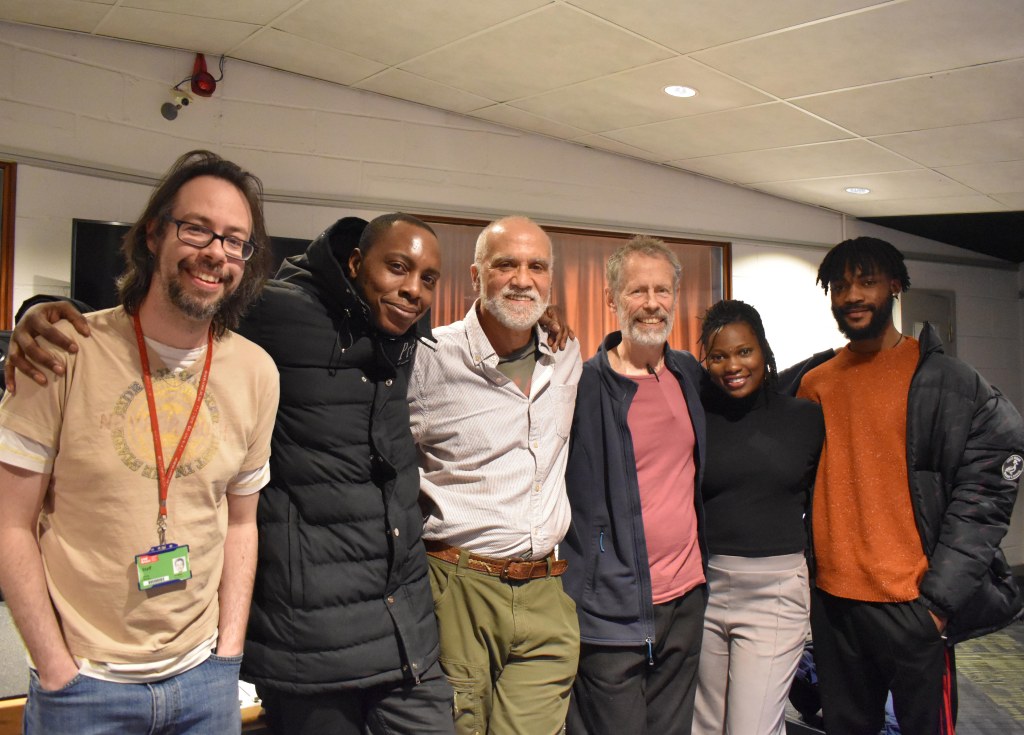
Voice artists and crew: (from left) Phill Phelps/audio engineer & coder; Jade Fearon/voice actor; Ralph Hoyte/concept, script, director, producer; Alan Coveney; Kerry-Ann Waison; Aaron Iyiih/voice actors
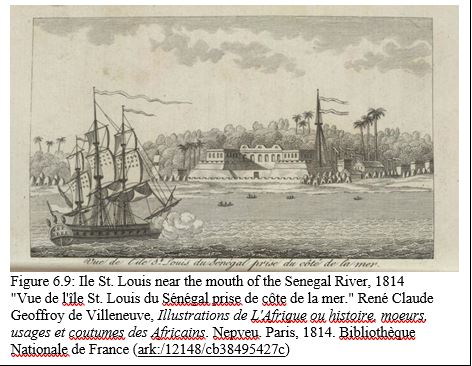
THIS IS A WORK OF SOUNDART, NOT AN HISTORICAL GUIDE



Permission to use data from the Trans-Atlantic Slave Trade – Database gratefully acknowledged
 Colston's Last Journey